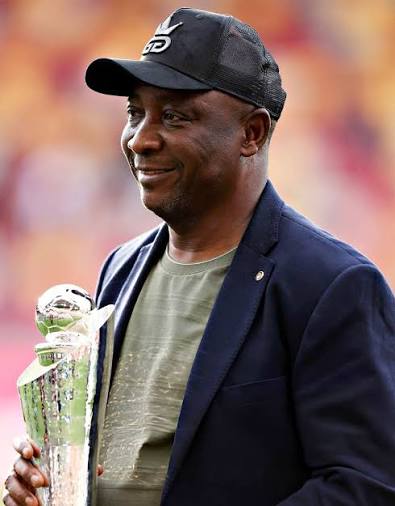
Ibrahim Gusau has resigned as President of the Nigeria Football Federation alongside General Secretary Mohammed Sanusi and several members of the federation’s executive committee, plunging Nigerian football into a major leadership crisis.
Gusau confirmed his resignation during a press conference in Abuja on Thursday after reportedly consulting his family, friends and key stakeholders before making the decision.
The development came only weeks before the scheduled NFF elections and has created fresh uncertainty over the future leadership of the federation.
Reports indicated that the majority of the 13 members of the NFF board had also resigned, leaving the organisation facing an unprecedented situation at the top of Nigerian football.
The federation has now convened an emergency congress in Abuja to determine how it will proceed and clarify the status of the remaining executive committee members.
The sudden departures marked another difficult moment for an organisation that has faced growing scrutiny over the administration and performance of Nigeria’s national teams.
Super Falcons setback increases pressure
The pressure on Gusau and his administration had intensified following the Super Falcons’ failure to qualify for the 2027 FIFA Women’s World Cup.
Nigeria had appeared at every edition of the Women’s World Cup since the tournament began in 1991, making the country’s absence from the next edition a major setback for the women’s national team.
The Super Falcons entered the 2026 Women’s Africa Cup of Nations as defending champions but saw their title defence end in the quarter-finals after a 1-0 defeat to Cameroon.
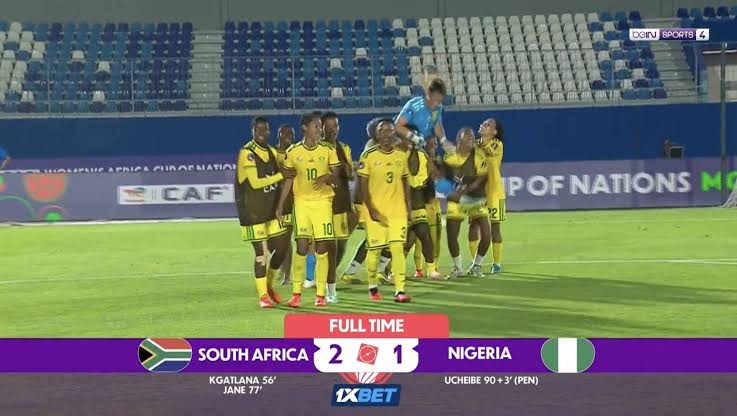
The result initially sent Nigeria into the World Cup play-off route, but Justine Madugu’s side subsequently suffered another defeat to South Africa, ending their hopes of reaching the tournament in Brazil.
Missing the World Cup represented a significant blow to Nigerian women’s football, particularly given the Super Falcons’ long-standing record of appearing at every previous edition.
The setback also added to concerns about the federation’s ability to maintain Nigeria’s position among Africa’s leading football nations.

The problems extended beyond the senior women’s team.
Nigeria’s U20 men’s side also failed to qualify for the 2027 U20 Africa Cup of Nations after suffering a heavy defeat to Burkina Faso in the final of the WAFU Zone B U20 Championship in Yamoussoukro.
With multiple national teams struggling to achieve major qualification targets, questions over the NFF’s football development structures had continued to grow.
NFF administration faces financial questions
The federation has also faced scrutiny away from the pitch, particularly over its handling of government funding and outstanding financial obligations.
The Department of State Services was reportedly among the security agencies examining the utilisation of a N17 billion Federal Government intervention fund approved in 2024.
The money was intended to help settle outstanding wages, bonuses and other financial obligations owed to Nigeria’s national teams.
The financial questions added another layer to the pressure surrounding the federation’s leadership, with stakeholders increasingly calling for greater transparency and accountability in the management of Nigerian football.
Gusau’s administration did oversee some notable achievements, including Nigeria’s run to the final of the 2023 Africa Cup of Nations.
The Super Eagles finished as runners-up after losing to hosts Ivory Coast in the final, giving Nigerian football supporters hope that the national team could challenge for major honours again.
However, subsequent failures to qualify for consecutive World Cups, combined with setbacks involving other national teams, have significantly increased scrutiny of the federation.
What happens next for Nigerian football?
Gusau’s resignation, together with the departure of Sanusi and other executive committee members, leaves the NFF facing an important period of transition.
The emergency congress in Abuja is expected to play a key role in determining how the federation will be administered before the next leadership structure is established.
With the NFF elections approaching, stakeholders will now be watching closely to see whether the crisis changes the timetable or creates a new path towards the election of the federation’s next leadership.
The immediate priority will be restoring stability while ensuring that the administration of Nigerian football continues without further disruption.
For supporters, players and other stakeholders, the hope will be that the current crisis becomes an opportunity to introduce stronger accountability, improve financial management and establish a clearer long-term strategy for Nigeria’s national teams.
The NFF now faces the challenge of turning a major leadership breakdown into a fresh beginning for Nigerian football.