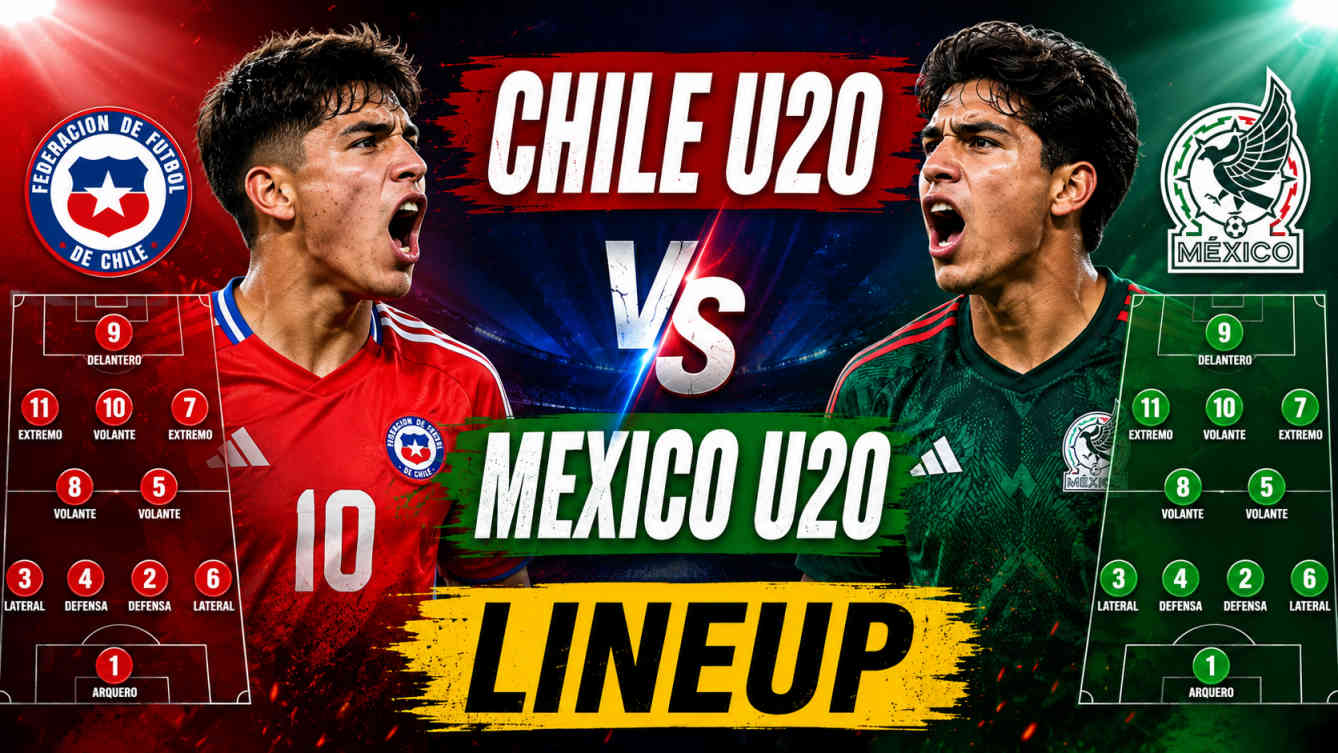
The Chile U20 vs Mexico U20 rivalry offers a fascinating glimpse into the future of international football, showcasing emerging talent, evolving tactical philosophies, and the intense competitiveness of youth-level tournaments.
Whenever these two nations face off, the encounter transcends a typical youth fixture. It becomes a battle of contrasting football cultures, where South American flair meets North American discipline, and where tomorrow’s stars are given a stage to announce themselves on the global scene.
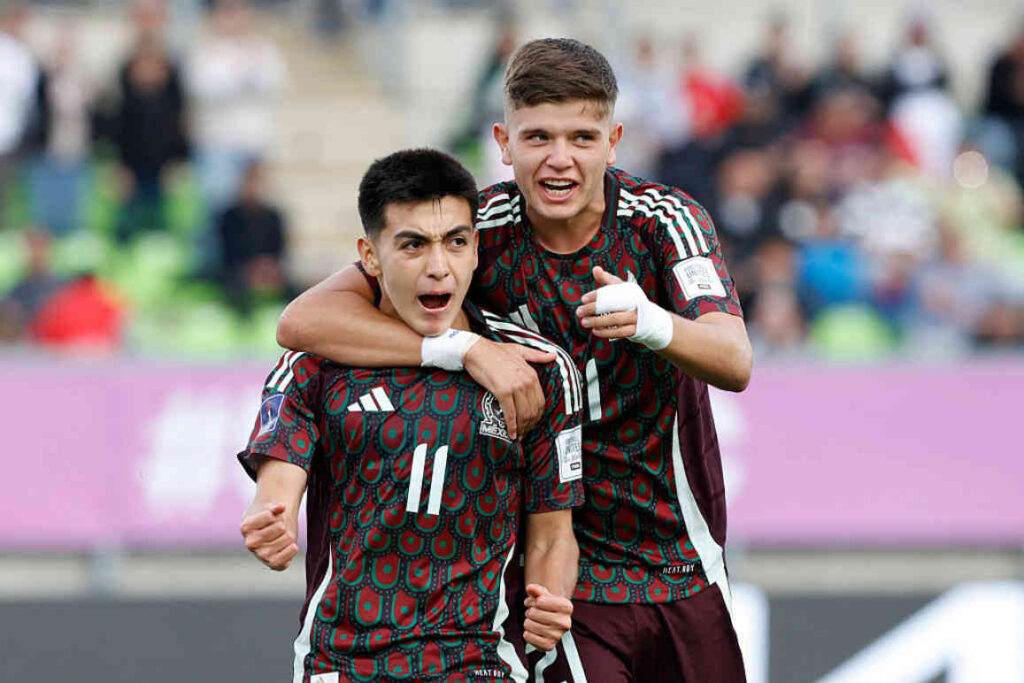
Their latest significant meeting at the 2025 FIFA U-20 World Cup highlighted Mexico’s tactical maturity and clinical efficiency. Dominating key phases of the game, particularly in transition, El Tri U20 produced an impressive performance to secure a commanding 4-1 victory over Chile, underlining their status as one of the tournament’s standout sides.
Chile U20 Vs Mexico U-20 Lineups
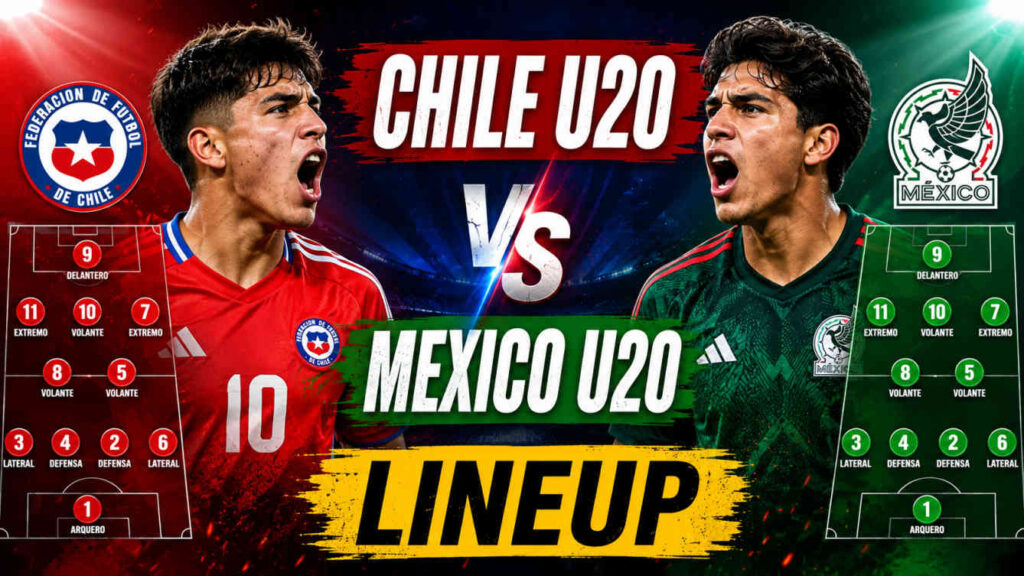
The Round of 16 clash between Chile U20 and Mexico U20 at the 2025 FIFA U-20 World Cup was a fascinating tactical battle between two sides with contrasting approaches.
Played at Estadio Elías Figueroa in Valparaíso on October 7, 2025, the match saw Mexico produce one of their most complete performances of the tournament, defeating host nation Chile 4-1 to secure a place in the quarter-finals.
Chile entered the match with a youthful side built around the creativity of Agustín Arce, Lautaro Millán, and leading scorer Juan Rossel, while Mexico relied on the technical quality of Gilberto Mora, the energy of Iker Fimbres, and the attacking threat of Tahiel Jiménez.
The hosts largely lined up in a 4-4-2 system focused on direct attacks and wing play, whereas Mexico adopted a more fluid structure that allowed them to dominate transitions and exploit spaces behind the Chilean defence.
Lineup Analysis: The 2025 World Cup Encounter
Mexico U-20: 3-4-1-2 Formation
Mexico opted for a flexible and aggressive 3-4-1-2 formation. This shape allowed them to overload the middle of the park while maintaining significant width through their wing-backs.
- Goalkeeper: Emmanuel Ochoa
- Defenders: José Pachuca, Diego Ochoa, Everardo López
- Midfielders: Alexei Domínguez, Elías Montiel, Obed Vargas, Diego Sánchez
- Attacking Midfielder: Iker Fimbres (operating in the number 10 role)
- Strikers: Tahiel Jiménez, Gilberto Mora
Manager: Eduardo Arce
Chile U-20: 4-2-3-1 Formation
Chile utilized a more traditional 4-2-3-1, prioritizing a stable defensive block with the hope of launching quick vertical attacks.
- Goalkeeper: Sebastián Mella
- Defenders: Ian Garguez, Milovan Celis, Patricio Romero, Nicolás Suárez
- Midfielders: Agustín Arce, Lautaro Millán
- Attacking/Wingers: Vicente Álvarez, Javier Cárcamo, Felipe Faúndez
- Striker: Juan Rossel
Manager: Nicolás Córdova
Mexico’s tactical discipline ultimately proved decisive. After absorbing early pressure from the hosts, El Tri U20 took control through intelligent midfield rotations and rapid counterattacks.
Goals from Tahiel Jiménez, Iker Fimbres, and a late brace from Hugo Camberos sealed a convincing 4-1 victory, with Juan Rossel scoring Chile’s consolation goal in the closing stages.
The result highlighted Mexico’s growing maturity on the international stage and underlined why several members of this squad are regarded as future senior national team prospects.
U20 International Football
The U20 level represents one of the most important stages in a footballer’s development, serving as the final stepping stone between youth football and the senior international game.
For nations such as Chile and Mexico, U20 competitions are more than developmental tournaments; they are proving grounds where future stars earn their first taste of elite international competition.
The FIFA U-20 World Cup, in particular, has long been a launchpad for some of football’s biggest names. Scouts from leading clubs across Europe, North America, and South America closely monitor the tournament, searching for the next generation of talent capable of making an impact at the highest level.
Chile’s youth development philosophy has traditionally centered on technical excellence, intelligent movement, and positional awareness.
Their U20 teams are often encouraged to dominate possession, build attacks patiently from the back, and control matches through midfield creativity rather than physical superiority.
The system is designed to develop technically refined players who can operate effectively under pressure and dictate the game’s tempo. Mexico, meanwhile, has established itself as one of the most consistent producers of youth talent in the Americas.
While technical ability remains a key component of player development, Mexican youth teams are renowned for their pace, dynamism, and attacking intent. Their approach places a strong emphasis on quick transitions, aggressive pressing, and exploiting space in wide areas, creating teams capable of turning defence into attack within seconds.
The contrast between these footballing philosophies often makes meetings between Chile U20 and Mexico U20 particularly intriguing. Chile typically seeks control through possession and structured build-up play, while Mexico looks to impose a higher tempo and capitalize on transitional moments.
This tactical contrast was evident in their recent FIFA U-20 World Cup encounter, where Mexico’s clinical finishing and efficiency in transition proved decisive.
Beyond the result itself, matches of this nature provide a glimpse into the future of international football, showcasing the emerging talents who may soon become key figures for their respective senior national teams.
Key Players
Across both U-20 squads, several talents are already signaling a clear pathway into senior international football within the next 18–24 months. Their performances suggest not just potential, but readiness for higher-level professional environments.
Tahiel Jiménez (México): A sharp, intelligent forward whose movement off the ball consistently unsettles defensive lines. Jiménez thrives in exploiting half-spaces and timing his runs behind defenders, making him a strong example of the modern attacking profile emerging in Mexican football. Juan
Francisco Rossel (Chile): Even in difficult phases of play, Rossel stands out for his resilience and competitive mentality. His ability to stay involved, remain dangerous late into matches, and continuously press defenses reflects the kind of mental toughness that translates well to senior international football.
Gilberto Mora (Mexico): A technically gifted playmaker with advanced vision for his age, Mora dictates tempo with composure and creativity. His decision-making in tight spaces positions him as a potential long-term orchestrator for Mexico’s senior midfield structure.
Head-to-Head Stats U-20
| Date | Competition | Home Team | Result | Away Team |
|---|---|---|---|---|
| October 7, 2025 | FIFA U-20 World Cup Round of 16 | Chile U20 | 1-4 | Mexico U20 |
| October 2014 | International Friendly | Chile U20 | 1-2 | Mexico U20 |
| May 2014 | International Friendly | Chile U20 | 2-2 | Mexico U20 |
| November 2012 | International Friendly | Chile U20 | 3-2 | Mexico U20 |
| December 2010 | International Friendly | Chile U20 | 2-3 | Mexico U20 |
| February 2008 | International Friendly | Mexico U20 | 0-0 | Chile U20 |
The tactical contrast between Chile and Mexico at the U-20 level highlights a broader evolution in youth international football. Chile’s traditionally technical and possession-oriented identity remains evident, but it is increasingly tested by Mexico’s sharper transitional speed and more aggressive physical pressing.
In their recent encounters, Mexico’s ability to accelerate play in transition and exploit defensive gaps proved decisive, while Chile’s structured buildup play emphasized control but sometimes lacked vertical urgency in key moments.
Beyond the immediate results, chile u20 vs mexico u20 lineups offer a clear window into the future of both national teams. Many of these players are not merely tournament participants.
As they progress into senior careers, the tactical and psychological demands of tournaments like the FIFA U-20 World Cup (2025) will serve as foundational experiences shaping their development at the highest level.
Both nations continue to refine their tactical identities. Chile, with variations of structured possession systems such as the 3-4-1-2, and Mexico, with more flexible setups like the 4-2-3-1, that emphasize balance and transition control.
Future Chile vs Mexico encounters at the senior level are therefore likely to remain highly competitive, shaped by this evolving generation of players who are already adapting to the demands of modern international football.