Italian football has been plunged into one of the most turbulent periods in its recent history following the departure of national team head coach Gennaro Gattuso, MySportDab Reports.
His resignation comes in the wake of Gabriele Gravina stepping down as president of the Italian Football Federation and Gianluigi Buffon leaving his role as head of delegation, marking a complete collapse of the federation’s leadership structure.
Gattuso officially ended his tenure after Italy’s failure to qualify for the World Cup, having been eliminated by Bosnia in a dramatic penalty shootout. The defeat has come to symbolize not only a sporting failure but also a deeper institutional crisis within Italian football.
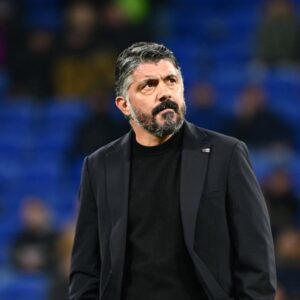
In an official statement released on Friday, Gattuso confirmed his decision to step aside, expressing disappointment at not achieving the team’s primary objective.
“With a heavy heart, having failed to achieve the goal we set ourselves, I consider my time as coach of the national team to be over,” Gattuso said. He also emphasized the honor of leading the Azzurri and praised his players for their commitment and professionalism.
The FIGC acknowledged his departure, confirming that both parties had mutually agreed to terminate the contract. The federation thanked Gattuso and his staff for their dedication over the past nine months and wished them success in their future endeavors.
The coaching exit follows days of mounting pressure, as poor results on the pitch were compounded by instability off it. Gravina’s resignation came after consultations with key stakeholders, while Buffon’s emotional farewell highlighted the growing dissatisfaction within the national setup. In such a climate, Gattuso’s position had become increasingly untenable.
Now, Italy faces a critical rebuilding phase. For the third consecutive time, the Azzurri will miss the World Cup, intensifying the urgency for structural and technical reform. The appointment of a new head coach will be one of the most significant decisions in shaping the team’s future.
Among the leading candidates are experienced managers such as Massimiliano Allegri and Antonio Conte, both seen as capable of restoring authority and competitiveness. Meanwhile, Silvio Baldini could take temporary charge for upcoming friendlies against Luxembourg and Greece.
With no president, no head of delegation, and now no head coach, Italian football stands at a crossroads. The road to recovery will require decisive leadership, clear vision, and a renewed sense of identity.