
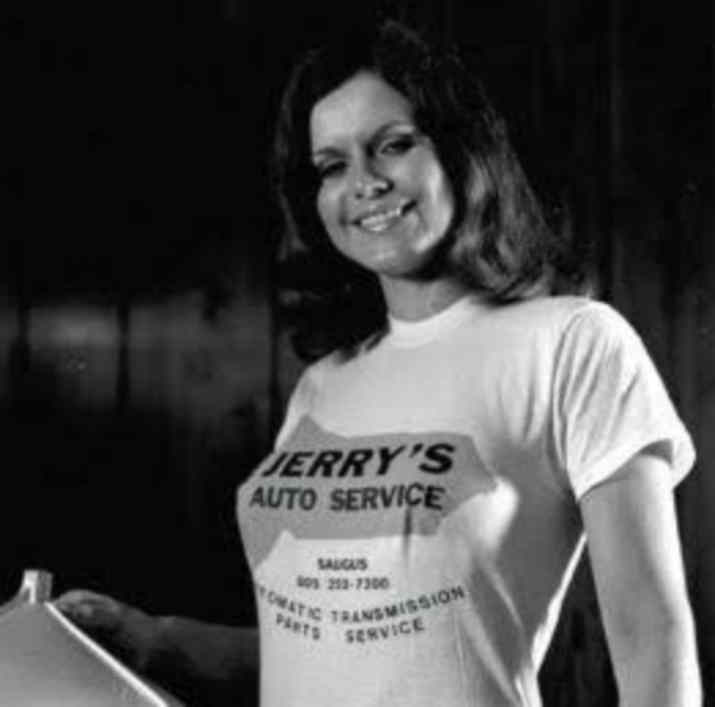
Barbara Roufs was an American drag racing trophy girl whose image became closely associated with Southern California drag racing during the early 1970s. She was not a professional race driver or NHRA competitor.
Instead, she became one of the best-known promotional figures of the era, appearing at major drag racing events where trophy girls were an established part of motorsport culture.
Interest in Roufs grew decades after her death when a collection of photographs taken by motorsport photographer Tom West resurfaced online.
The images introduced her to a new generation of drag racing fans and helped cement her reputation as one of the defining faces of the sport’s golden age.
Her life ended tragically in January 1991, but her photographs continue to appear in books, documentaries, drag racing forums and historical features about American motorsport.
Table of Contents
Barbara Roufs Biography

She was born in 1944 in California, United States. Barbara Roufs spent nearly all of her life in California during a period when hot rods, drag racing, and car culture were becoming defining parts of the state’s identity.
Very little information about her childhood has been publicly documented. Roufs became known before the internet era, meaning much of her private life was never recorded in newspapers or television interviews.
Most of the verified details available today have come from family records, archived photographs and later contributions from relatives following renewed public interest in her story.
Her parents were: Wayne Eldon Roufs, and Thelma Ruby Roufs. Both remained active members of their local California community for many years.
Wayne Roufs was known locally for his passion for motorsports, motorcycles and outdoor recreation, while Thelma operated a beauty salon and was heavily involved with church activities throughout her life.
Barbara grew up alongside several siblings in a close family environment before beginning adult life during the cultural changes of the late 1960s and early 1970s.
Those years transformed American motorsport. Drag racing evolved from small local competitions into organised national events that attracted thousands of spectators across California.
That changing environment would eventually make Barbara one of its most recognisable personalities.
Career

Barbara Roufs became one of the most recognisable trophy girls during the height of Southern California drag racing in the early 1970s. The role of a trophy girl extended well beyond presenting awards.
Promoters relied on them to welcome competitors, appear in promotional material, participate in victory lane ceremonies and help create a professional image for race meetings.
Before modern sponsorship activation and digital marketing, trophy girls were a familiar part of American motorsport culture. Roufs quickly became a favourite among photographers covering drag racing events across California.
Her appearance reflected the changing fashion of the era. Long blonde hair, knee-high boots, colourful outfits and the influence of late 1960s youth culture distinguished her from trophy girls of previous generations.
Those images became symbolic of drag racing’s transition into a new decade. Her popularity coincided with an important period for the sport.
During the early 1970s, American drag racing experienced significant growth as powerful Funny Cars and Top Fuel dragsters attracted record crowds.
Drivers such as Don Prudhomme, Tom McEwen and Don Garlits helped transform drag racing into one of the country’s fastest-growing motorsports.
Roufs became a familiar face during many of those events, regularly appearing in victory lane photographs alongside competitors and race officials.
She was never promoted as a celebrity during her lifetime. Instead, she earned widespread recognition because spectators, photographers and racers remembered her presence at many of the biggest regional drag racing meetings.
Fame
Barbara Roufs became famous decades after her death dramatically. During the 2010s, respected drag racing photographer Tom West published a large archive of photographs documenting California drag racing during the early 1970s.
Among those photographs were numerous images of Roufs. The photographs attracted immediate attention from drag racing enthusiasts because they captured an important period in motorsport history while also showcasing one of the era’s most recognisable promotional figures.
Many fans who had attended those events remembered seeing Roufs at race tracks throughout California. Others discovered her for the first time through the restored photographs. Her daughter later confirmed Barbara’s identity after recognising the images online.
That confirmation helped preserve an important piece of drag racing history, with family members expressing appreciation that Barbara continued to be remembered many years after her passing.
Today, her photographs regularly appear in:
- Historical drag racing publications.
- Motorsports documentaries.
- Automotive museums and exhibitions.
- Classic drag racing websites.
- Vintage motorsport photography collections.
Barbara Roufs has become an enduring symbol of drag racing’s golden era, representing a period when the sport’s atmosphere, fashion and personalities helped create one of American motorsport’s most memorable decades.
Family & Children

Barbara Roufs largely kept her private life away from public attention, even while she became one of the best-known trophy girls in California drag racing.
She rarely gave interviews, and newspapers covering drag racing during the 1970s focused almost entirely on the racing itself. Reliable public records confirm that Roufs became a mother during her lifetime.
One of her children, Jet Dougherty, later helped verify Barbara’s identity after previously unpublished photographs surfaced online decades after her death.
Jet’s comments provided some of the most important first-hand insight into Barbara’s life. After recognising the photographs shared by photographer Tom West, she explained that the images captured some of the happiest moments of her mother’s life during the peak of Southern California drag racing.
Her contribution also confirmed several facts that had previously remained uncertain, including Barbara’s year of death. Beyond those details, very little verified information has been made public about Roufs’ wider family life.
There are no reliable public records identifying her husband or documenting her marriage in detail.
Barbara Roufs’ Death
Barbara Roufs died in January 1991 at the age of 47. Her death remained largely unknown outside drag racing circles until years later, when renewed public interest in her photographs prompted questions about what had happened to one of the sport’s most recognisable personalities.
Following the publication of Tom West’s archive, Barbara’s daughter publicly confirmed that her mother had died in 1991. Subsequent public records and family statements identified the cause of death as suicide.
No verified public information has ever explained the circumstances leading to her death, and her family has largely chosen to keep that part of her life private. Because of that, responsible historical reporting avoids speculation about possible reasons.
Barbara’s death marked the loss of someone many drag racing fans remembered for her warmth, professionalism and enthusiasm during one of the sport’s defining eras.
More than three decades later, discussions surrounding Roufs focus far more on her contribution to drag racing history than on the circumstances of her passing.