Nigeria are exploring all possible avenues, including seeking compensation from FIFA, after new allegations emerged over DR Congo’s use of an allegedly ineligible player during the 2026 World Cup qualifying campaign.
A top Nigerian National Sports Commission (NSC) official said the latest revelations had vindicated Nigeria’s previous challenge against DR Congo’s player eligibility and insisted that “nothing is off the table” as the country considers its next steps.
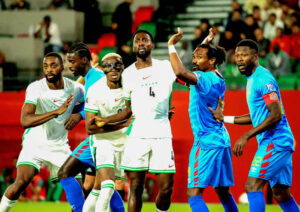
The development follows reports by The New York Times and Le Monde claiming that FIFA’s own legal officials determined DR Congo goalkeeper Lionel Mpasi was ineligible because his change of international association from France had not been completed.
According to the reports, FIFA lawyers identified the issue in March, before DR Congo played Jamaica in the intercontinental World Cup playoff, but no disciplinary action was taken.
DR Congo subsequently defeated Jamaica and secured their place at the 2026 World Cup.
Nigeria believe new evidence strengthens their case
The NSC official told ESPN that Nigeria could seek compensation for the financial and sporting losses caused by missing the tournament.
“Nothing has been decided yet, but we will seriously consider seeking compensation from FIFA for all of the economic losses this has cost Nigeria,” the official said.
“The revenue that the Super Eagles and the NFF would have received from participating at the World Cup, the exposure that players would have got, transfers, the sponsorship fees, even the boost to the Nigerian economy.
“We are exploring all our options as a country and nothing is off the table.”
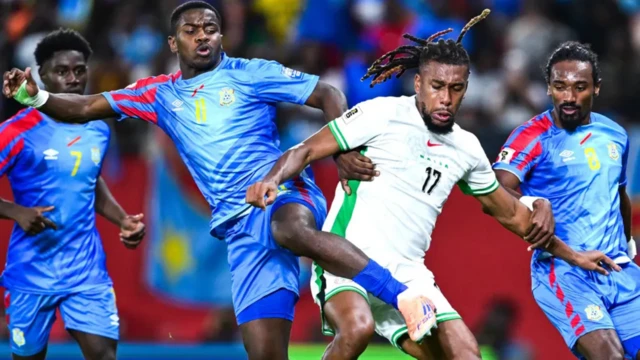
Nigeria were eliminated by DR Congo in the African World Cup playoff in November after a 1-1 draw following extra time, with DR Congo winning 4-3 on penalties.
The original complaint went beyond Mpasi
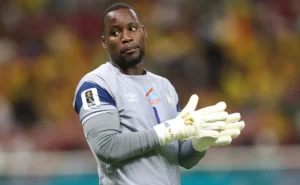
The Nigeria Football Federation had initially raised wider concerns over the eligibility of several DR Congo players.
The NFF argued that some of the players had been improperly cleared by FIFA because of questions surrounding their nationality status under Congolese law.
Former NFF president Ibrahim Gusau claimed FIFA had been misled when the players were approved.
“The Congolese rules say you cannot have dual nationality,” Gusau said.
“FIFA regulations say once you have the passport of your country, you are eligible. As far as we are concerned, they are eligible, that is why they are cleared by FIFA. But our contention is that FIFA was deceived into clearing them.”
Nigeria now believes the allegations surrounding Mpasi strengthen its argument that FIFA should have investigated the eligibility concerns.
NSC calls for FIFA to reopen the case
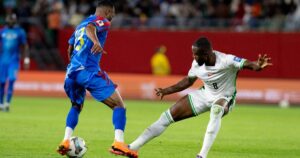
The NSC official argued that Nigeria’s petition should not be dismissed on procedural grounds and called for FIFA to revisit the case following the latest revelations.
“Nigeria has been vindicated,” the official said.
“When we said we had written a petition to FIFA, people accused us of all sorts of things. I think this has proven that we were correct that DRC fielded ineligible players.”
The official also rejected the suggestion that Nigeria should have submitted a formal protest immediately after the match.
“We did not need to file a protest. So the issue of filing late did not arise,” the official said.
“We only sent in a petition to remind them to apply the rules, the same way they did when South Africa fielded an ineligible player, and when we fielded an ineligible player during the 2018 World Cup qualifiers.
“By rule, these sanctions kick in automatically once it is identified.”
Nigeria point to previous FIFA eligibility sanctions
There is precedent for FIFA taking action over players who were found to be ineligible.
Bolivia forfeited two 2018 World Cup qualifiers after fielding Nelson Cabrera, while the Court of Arbitration for Sport later confirmed FIFA’s authority to open disciplinary proceedings on its own initiative.
Greece were also sanctioned in 2016 for fielding Apostolos Giannou before his change of international association from Australia had been completed.
More recently, South Africa forfeited a 2026 World Cup qualifier against Lesotho after fielding suspended midfielder Teboho Mokoena.
The NSC believes those cases strengthen its argument that FIFA should examine the DR Congo situation.
Nigeria want more than compensation
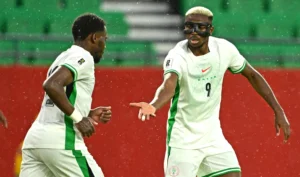
Beyond potential financial compensation, Nigeria are also seeking a fresh review of DR Congo’s case.
The NSC official claimed the latest evidence could turn the matter into an issue of fraud rather than simply a dispute over the timing of Nigeria’s original petition.
“Nigeria will be seeking for FIFA to review the case because the case is about fraud and fraud does not have a time limit for punishment,” the official said.
“DRC should be made to face consequences for what they have done, to serve as a lesson to others who may want to try the same thing in future.”
Nigeria’s next move will now depend on how FIFA responds to the latest allegations and whether the governing body agrees to revisit DR Congo’s qualification for the 2026 World Cup.