Greyhound racing does not offer much room for illusion. There are no elaborate tactics drawn up in advance, no team shapes to debate, no long pauses to reset momentum. Once the traps open, the outcome is shaped by instinct, conditioning and reaction. What unfolds happens quickly, honestly and without compromise. For some people, it may be almost exposed.
Amidst the growing prevalence of sports being seamlessly integrated into data, graphics, and interpretation, the simplicity of greyhound racing becomes all the more singular. The venue is the stage, and the dogs are the actors; the action commences and concludes in a matter of moments. There is hardly any opportunity to make up stories or excuses. The result is expected or otherwise.
This immediacy puts greyhound racing in a different realm altogether. Unlike other sporting activities, where lost momentum can be regained or mistakes can be hidden over time, in this sport, everything is very much in the open. A slow start, an incorrect approach to the curve, a pause, and the race is practically over. While this can make for very uneasy viewing, it is also very welcome. And it serves as a reminder that sport, to carry any real depth, does not have to have any layers.
There is an understanding that nothing is hidden behind reputation or mythology. Decisions made by trainers, preparation routines and track conditions all matter, but once the race starts, instinct takes over. It is why conversations around form or whether to bet on greyhounds tend to focus less on hype and more on observable patterns, habits and behaviour that reveal themselves plainly on the track.
A Sport That Resists Over-Explanation
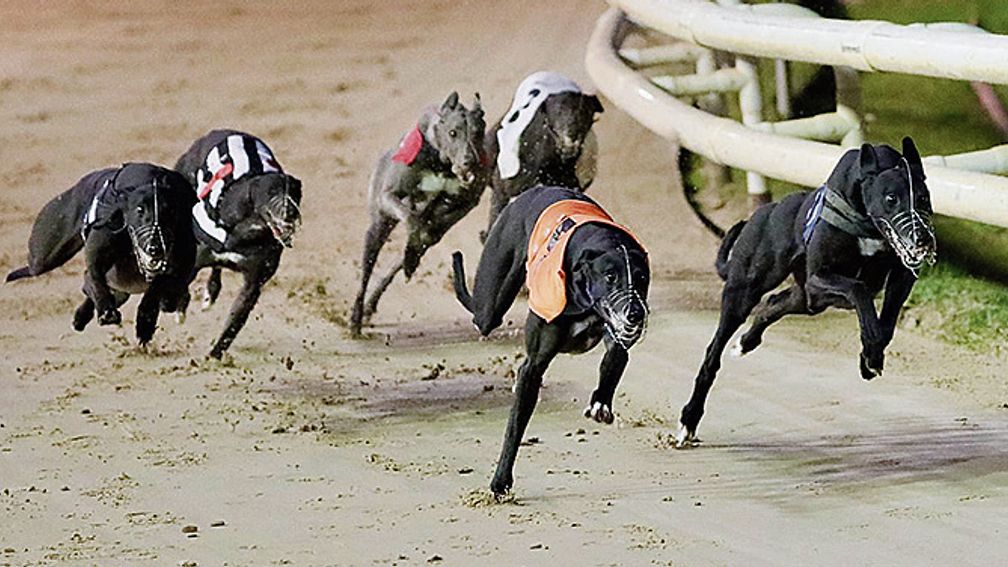
Greyhound racing does not invite endless analysis because it does not need it. The fundamentals are visible to anyone paying attention. Break speed, track craft, stamina and temperament show themselves repeatedly. While modern broadcasts now include statistics and replays, the core experience remains unchanged.
This resistance to over-explanation stands in contrast to much of modern sport. Football matches can be dissected for days. Tactical diagrams multiply. Debates continue long after the final whistle. Greyhound racing rarely affords that luxury. The truth of the race is settled almost immediately.
That does not make it simplistic. On the contrary, it demands a different kind of attention. Watching closely means learning to recognise subtle cues rather than relying on narratives built around personalities or club histories. It rewards observation rather than assumption.
Why Instinct Still Matters
At its heart, greyhound racing is about instinct meeting preparation. Dogs are trained meticulously, yet the moment of release cannot be rehearsed endlessly. Reaction time, composure and the ability to respond to the movement around them decide outcomes in real time.
This balance between structure and spontaneity mirrors something fundamental about competition. No matter how refined preparation becomes, there is always a moment where control gives way to reaction. Greyhound racing simply makes that moment impossible to ignore.
In many ways, this is why it feels so honest. There is no buffer between decision and consequence. The race does not wait for narrative arcs to form. It moves forward regardless.
The Experience of Watching Without Distraction
There is also something distinctive about watching a greyhound race in person. The atmosphere is focused rather than theatrical. Conversations quieten as the traps rise. Eyes follow the dogs, not screens or scoreboards. For a brief moment, attention narrows.
That kind of shared focus is becoming rarer across sports venues. Distractions compete for attention constantly. Greyhound racing, by contrast, demands presence. Miss the start and you miss the race.
A Sport Shaped by British and Irish Roots
The sense of exposure and live immediacy in greyhound racing has not occurred by chance. It has very deep roots in the sporting culture of Britain and Ireland, and it precedes the advent of floodlighting, television coverage of meetings, or digital media. Greyhound racing in the early part of the last century was a working-class sport in industrial cities in England, Scotland, and Ireland, where people did not come for ceremony but for no-nonsense competition. White City in London or Shelbourne Park in Dublin were famous places, where speed and natural talent were more valuable than polish.
Racing was accessible, fast and transparent. The dogs ran in full view, with no disguises and no prolonged build-up. The appeal lay in how little stood between the spectator and the outcome. You could see everything unfold in under thirty seconds.
In Ireland, especially, greyhound racing embedded itself into local identity. It developed into a tradition that has been passed down through the years, with families acting as training, breeding, and owning institutions. The Irish tradition had a reputation for breeding some of the best greyhounds in the world, admired for their endurance and racing acumen. While the British racetracks optimised the event by implementing some level of standardisation, while maintained the natural element associated with the competition.
That which has been retained is not nostalgia; it is structure. While current sporting activities have tended to become increasingly more complex in their format, the simplicity of the sport of greyhound racing has been maintained. This is also the reason why it remains a part of the current culture. The race is short. The margins are thin. And there is nowhere for illusion to survive.
Why This Simplicity Endures
Despite changes in how sport is consumed, greyhound racing has endured precisely because it does not chase complexity for its own sake. Its appeal lies in repetition and familiarity. The structure remains constant, allowing variation to emerge naturally rather than being manufactured.
This endurance speaks to a broader truth about sport. Not everything benefits from constant reinvention. Some formats survive because they continue to offer something honest and recognisable.
A Reminder of What Sport Can Be
Greyhound racing may not command the headlines it once did, but its value lies elsewhere. It reminds us that sport does not need layers of commentary to be meaningful. It does not need endless pauses to build drama. Sometimes, the purest contests are those where everything is visible, and nothing is concealed.
There is nowhere to hide in greyhound racing. No excuses linger beyond the finish line. What happened, happened. And in a sporting landscape increasingly shaped by interpretation rather than observation, that clarity remains quietly powerful.