
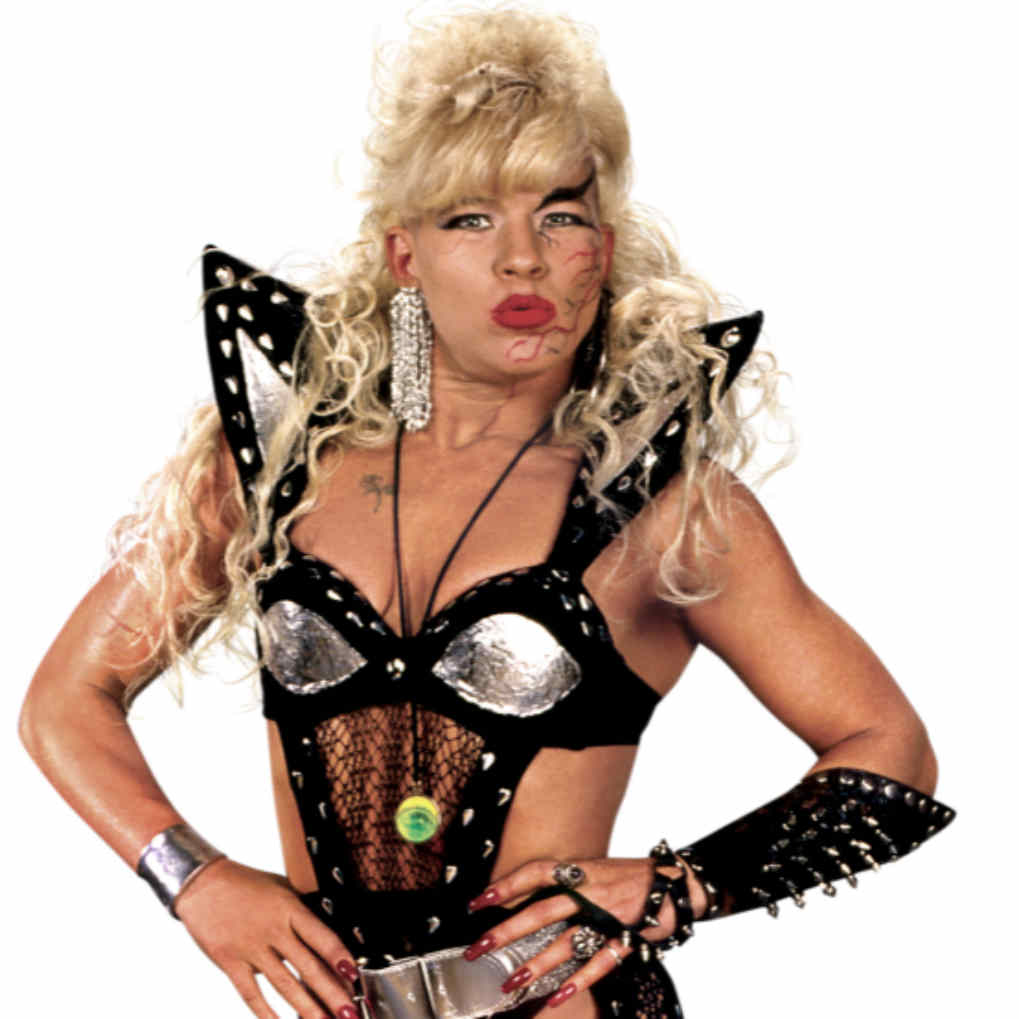
Luna Vachon was one of professional wrestling’s most distinctive performers, earning a reputation for her fearless in-ring style, theatrical character work and willingness to challenge expectations during an era when women’s wrestling received limited opportunities.
Across more than two decades, she competed in major promotions throughout North America and Japan, including the World Wrestling Federation, World Championship Wrestling, Extreme Championship Wrestling and numerous independent organisations.
Born into wrestling’s legendary Vachon family, she carried one of the sport’s most respected surnames while forging an identity that was entirely her own.
Her intimidating appearance, shaved hairstyle, face paint and aggressive wrestling style made her instantly recognisable to fans throughout the 1990s.
Although she never captured the WWF Women’s Championship, Luna became one of the most influential women of her generation and is widely credited with helping pave the way for future generations of female wrestlers.
In recognition of that contribution, WWE inducted her into the WWE Hall of Fame as part of the Legacy Wing in 2019.
Table of Contents
Luna Vachon Biography

She was born on 12 January 1962 in Atlanta, Georgia. Professional wrestling surrounded her from the very beginning.
She became part of one of the industry’s most famous families after her mother married wrestling legend Paul Vachon, who raised her as his daughter.
Through that family, Luna Vachon also became the niece of Hall of Fame wrestler Maurice Vachon and pioneering women’s wrestler Vivian Vachon.
Growing up inside wrestling gave Luna an education few future performers could match. She travelled with experienced wrestlers, watched matches from backstage and learned the realities of the business long before making her own debut.
The Vachon family believed professional wrestling demanded toughness above everything else. Paul Vachon encouraged Luna to understand every aspect of the profession, from physical conditioning to psychology inside the ring.
Those experiences shaped the performer she would later become. Away from wrestling, Luna’s childhood was marked by personal hardship.
Her biological father, Charles Wilkerson, died during her childhood, leaving Paul Vachon to become the principal father figure in her life.
In later interviews, Luna frequently spoke about how wrestling became both her career and her extended family. She regarded professional wrestling as the environment where she felt she truly belonged.
By her late teens, she had already decided to pursue wrestling professionally, following the path established by several members of the Vachon family while developing a persona that looked completely different from anyone who had come before her.
Career
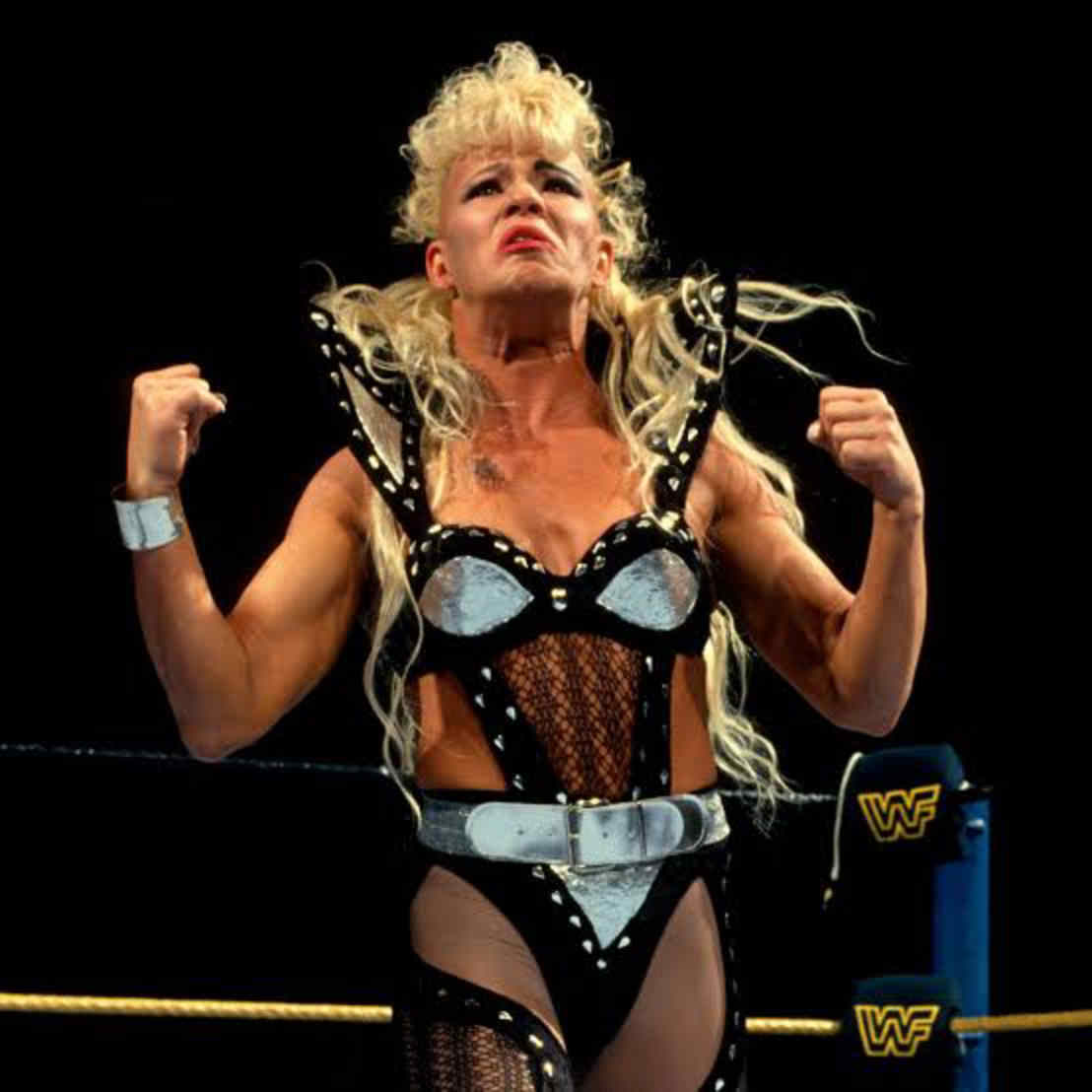
Luna Vachon made her professional wrestling debut in 1985, entering an industry where women rarely received sustained opportunities or prominent storylines.
From the beginning, she rejected the glamorous presentation that defined much of women’s wrestling during the era.
Instead, she built a character that was unpredictable, intimidating and psychologically intense. With her partially shaved hair, elaborate face paint and aggressive in-ring style, Luna quickly became one of the most distinctive performers in North American wrestling.
Her reputation grew through regional promotions before she expanded internationally.
After training under Paul Vachon and learning from other members of the famous Vachon wrestling family, Luna began competing across Canada and the United States.
She worked for several National Wrestling Alliance-affiliated promotions during the mid 1980s, gradually developing the persona that would later make her famous.
One of her earliest major opportunities came in Championship Wrestling from Florida, where she joined Kevin Sullivan’s dark and controversial stable known as the Army of Darkness.
Working alongside Sullivan allowed Luna to embrace the gothic, villainous character that became synonymous with her career.
She portrayed an unstable competitor whose intensity often overshadowed everyone around her.
The gimmick immediately separated her from most female wrestlers of the period.
Japan
Luna also competed extensively in Japan, where women’s wrestling enjoyed far greater popularity and higher technical standards than in North America during the late 1980s.
She wrestled for several Japanese promotions, facing elite competitors while refining her physical style inside the ring. Those experiences broadened her wrestling ability and helped establish her credibility internationally.
Japanese audiences responded well to her aggressive offence and theatrical personality, allowing her to gain valuable experience against some of the strongest women’s wrestlers in the world.
Ladies Professional Wrestling Association
By the late 1980s and early 1990s, Luna had become one of the leading names in the Ladies Professional Wrestling Association (LPWA).
The promotion gave female wrestlers opportunities to headline events at a time when mainstream organisations rarely featured women’s matches prominently.
Luna captured the LPWA Championship, adding a recognised national title to her growing résumé. Her performances in LPWA reinforced her reputation as one of the toughest female wrestlers in North America.
She earned praise for combining believable offence with compelling storytelling. World Championship Wrestling Luna later appeared in World Championship Wrestling, continuing to develop her reputation before eventually joining the World Wrestling Federation.
Although her WCW run was relatively brief compared with later stages of her career, it further established her as one of the industry’s leading female performers.
By the early 1990s, Luna Vachon had become recognised across multiple promotions as a veteran capable of elevating storylines through both character work and physical performances.
Her growing reputation eventually attracted the attention of the WWF, where she would achieve the highest profile exposure of her career.
Several qualities distinguished Luna from many of her contemporaries. She embraced a darker presentation at a time when many women’s characters remained heavily focused on glamour.
Promoters trusted her to participate in physically demanding matches and emotionally intense rivalries because of her willingness to commit fully to every storyline.
Her promos were equally memorable. Luna delivered interviews with a combination of controlled intensity and unpredictability that made audiences believe every word.
That authenticity became one of the defining features of her career and helped establish her as one of wrestling’s most respected character performers.
WWF Career
Luna Vachon joined the World Wrestling Federation in 1993, arriving at a time when the company was attempting to rebuild its women’s division while placing greater emphasis on character-driven storylines.
Her debut immediately stood out. Luna appeared with dramatic face paint, leather attire, and an unpredictable personality that made her one of the most intimidating figures on WWF television.
Managing Shawn Michaels
One of Luna’s first high-profile roles saw her aligned with Shawn Michaels. She briefly replaced Sensational Sherri as Michaels’ manager during his rivalry with Marty Jannetty.
Although the partnership lasted only a short period, it introduced Luna to a global television audience. It demonstrated the confidence WWF had in her ability to perform alongside one of the company’s biggest stars.
Bam Bam Bigelow
Luna soon formed one of the most memorable partnerships of her career with Bam Bam Bigelow. The pairing quickly became one of WWF’s most destructive alliances.
Together they entered a rivalry with Doink the Clown and his miniature sidekick Dink. The feud culminated at WrestleMania X, where Bigelow and Luna defeated Doink and Dink in one of the event’s featured tag team matches.
While the storyline carried elements of comedy, Luna’s performances remained intense throughout, reinforcing her reputation as one of the company’s most convincing villains.
Pursuing the Women’s Championship Following her partnership with Bam Bam Bigelow, Luna shifted her focus towards the WWF Women’s Championship.
She entered a long-running rivalry with champion Alundra Blayze. Although Luna never captured the championship, the feud became one of the centrepieces of the women’s division during the mid 1990s.
WWF also aligned Luna with Japanese star Bull Nakano, whose victory over Blayze helped reshape the championship picture.
Luna’s work throughout this period demonstrated that she could carry serious championship storylines despite never holding the title herself.
Goldust
When Luna returned to WWF in 1997, she entered another memorable partnership with Goldust. Their unusual personalities complemented one another, creating one of the promotion’s most distinctive on-screen pairings.
The alliance eventually led to a heated rivalry with Marc Mero and Sable. The feud culminated at WrestleMania XIV, where Mero and Sable defeated Goldust and Luna in a mixed tag team match.
Although Luna lost the contest, her performances throughout the rivalry earned widespread praise for adding genuine intensity to a programme that became one of WWF’s most talked-about storylines.
Rivalry With Sable
Luna’s feud with Sable remains one of the defining rivalries of her WWF career. The storyline contrasted two completely different visions of women’s wrestling.
Sable represented WWF’s growing focus on glamour and mainstream popularity. Luna represented traditional professional wrestling, relying on character work, physicality, and storytelling.
The rivalry divided fans and highlighted the changing direction of women’s wrestling during the late 1990s. Luna repeatedly challenged for the WWF Women’s Championship but never won the title.
Despite that disappointment, many historians and former performers believe she consistently delivered some of the division’s strongest matches during the period.
Luna continued appearing throughout 1999, managing Gangrel while remaining active within the women’s division. She left WWF in 2000 after seven years spread across two separate runs with the company.
Her willingness to embrace physically demanding matches and emotionally charged storylines helped establish a standard that many future generations of wrestlers would later follow.
Death

Luna Vachon died on 27 August 2010 at her home in Pasco County, Florida. She was 48 years old. Her death brought an emotional response across professional wrestling, where she remained widely respected for helping redefine what women could achieve inside the ring.
Several leading wrestling figures, including Mick Foley, publicly paid tribute to her influence and lasting legacy.
Health Struggles
During the later years of her life, Luna openly discussed several personal challenges. She spoke about living with bipolar disorder and had battled substance abuse for many years.
In 2009, she entered a rehabilitation programme funded by WWE through its talent assistance initiative. She completed treatment and expressed optimism about moving forward.
Later that year, another setback arrived when a fire destroyed many of her personal belongings, including wrestling gear, photographs, memorabilia and career keepsakes collected over decades in the business. The loss deeply affected her. Former colleagues organised efforts to help replace some of the items she had lost, with Mick Foley encouraging fans and wrestlers to donate memorabilia connected to her career.
In 2010, Luna largely stayed away from professional wrestling. She declined offers to make wrestling appearances, explaining that retirement remained the right decision for her.
She also remained active within her local church community after speaking publicly about rediscovering her Christian faith several years earlier.
Cause of Death
The District Six Medical Examiner’s Office in Florida ruled that Luna Vachon died from an accidental overdose involving oxycodone and benzodiazepines.
The medical examiner concluded there was no evidence of suicide or foul play. The official report determined that the combination of prescription medications caused fatal toxicity.
Authorities investigating the scene also documented drug paraphernalia inside the home, findings that were included within the medical examiner’s report.
Funeral
Following her death, Luna was cremated. Her ashes were later scattered at the North Carolina ranch once owned by André the Giant, one of her closest lifelong friends.
The location carried personal significance because of the close friendship the two shared throughout their wrestling careers.
Legacy
Luna Vachon is remembered as one of the most influential women in professional wrestling before the modern era. Long before women’s wrestling received equal billing at major events, she consistently demonstrated that female performers could build compelling rivalries through athleticism, storytelling and character work.
Many later stars have credited pioneers such as Luna for helping create opportunities that future generations would benefit from. In 2019, WWE formally recognised her contribution by inducting Luna Vachon into the WWE Hall of Fame as part of the Legacy Wing.
The honour acknowledged both her achievements inside the ring and her lasting influence on women’s professional wrestling.