The rivalry between two of the biggest teams, CF Monterrey Vs Club America, stands as one of the most compelling narratives in modern Mexican football history to this day.
While both clubs have their own intense regional rivalries, America has the Clásico de Clásicos against Chivas, and Monterrey has the passionate Clásico Regio against Tigres. Their head-to-head encounters have evolved into a high-stakes chess match of talent, tactics, and championship ambition.
CF Monterrey Vs Club America Timeline
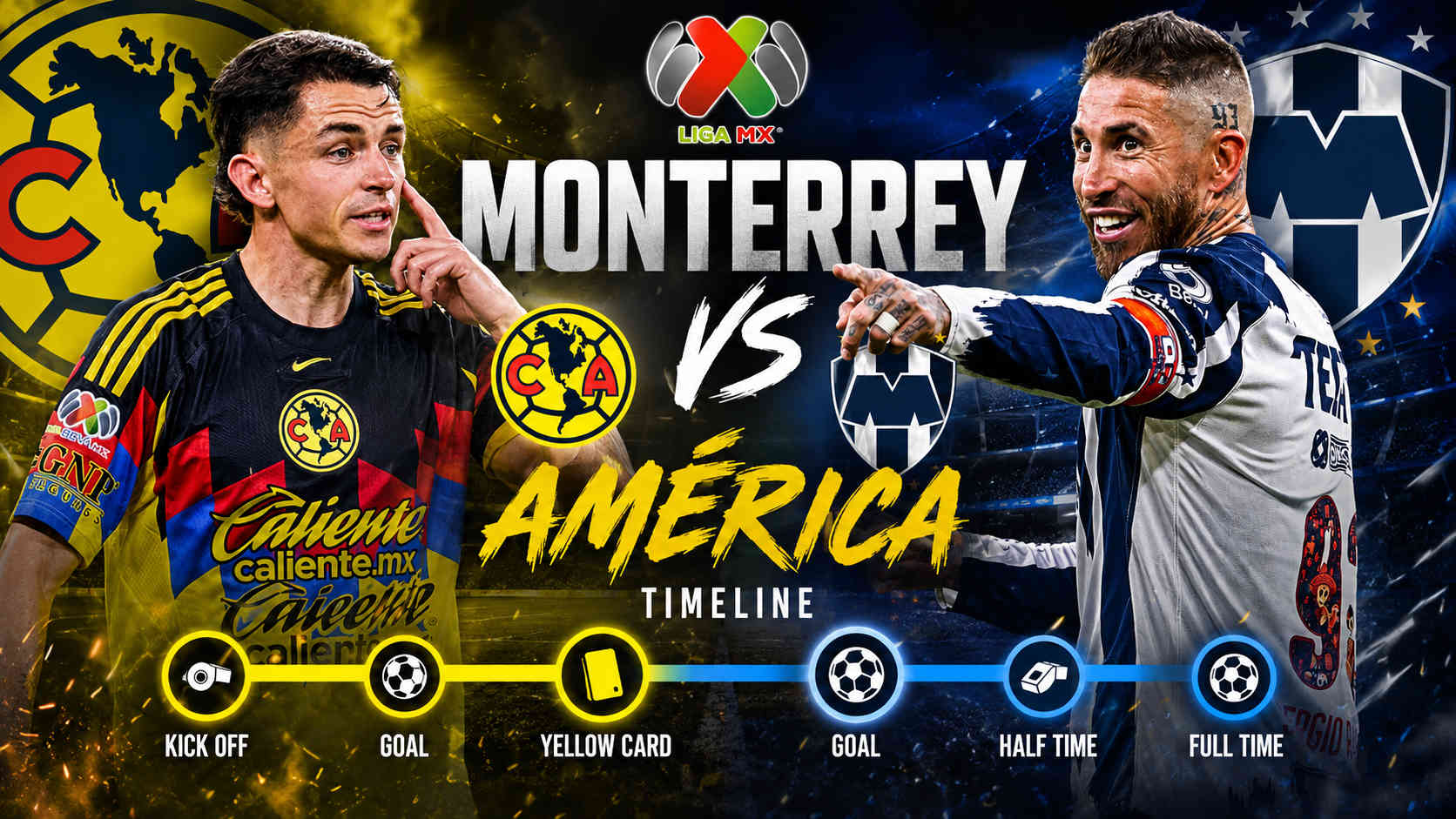
Unlike local derbies rooted in geographical proximity, the CF Monterrey Vs Club America rivalry is defined by their shared status as financial and sporting heavyweights.
Since the mid-2010s, both clubs have consistently operated with some of the highest budgets in the league, attracting international stars and top-tier managerial talent.
When these two meet, it is rarely just about three points. It is a collision between the capital city’s historic powerhouse, Club America, and the northern industrial machine, CF Monterrey.
The games are characterized by high intensity, tactical sophistication, and, frequently, significant postseason implications, among many others that have been witnessed.
The timeline of this fixture is marked by several pivotal encounters, particularly in the knockout stages of Liga MX and the CONCACAF Champions League.
The 2019 Apertura Final: A Masterclass in Tension
Perhaps the most iconic moment in their recent history occurred in December 2019. The Apertura Final pitted a star-studded Monterrey side against the perennial contender Club America.
- First Leg: Monterrey secured a 2–1 victory at the Estadio BBVA, setting the stage for a dramatic return in Mexico City.
- Second Leg: In front of a raucous crowd at the Estadio Azteca, America fought back, leading to a dramatic extra-time finish. The tie was ultimately decided by penalty kicks, with Monterrey emerging victorious in a nerve-wracking shootout. This win cemented Monterrey’s place as a dominant force of the era.
The 2021 CONCACAF Champions League Final
This match served as a testament to the continental ambitions of both clubs. Played at the neutral venue of the Estadio BBVA, the clash was a tactical battle of attrition.
Monterrey edged out a 1–0 win, further fueling the competitive fire between the two organizations as they vied for regional supremacy.
Recent Encounters: 2024–2026
In recent seasons, the fixture has remained remarkably balanced. The 2024/2025 cycle saw a series of tactical shifts.
In the 2025 Apertura quarterfinals, the teams traded wins, with America ultimately progressing on aggregate.
Most recently, on February 7, 2026, America secured a narrow 1–0 victory in a regular-season Clausura fixture, highlighting the razor-thin margins that define their meetings today.
Head-to-Head Record (2019-2026)
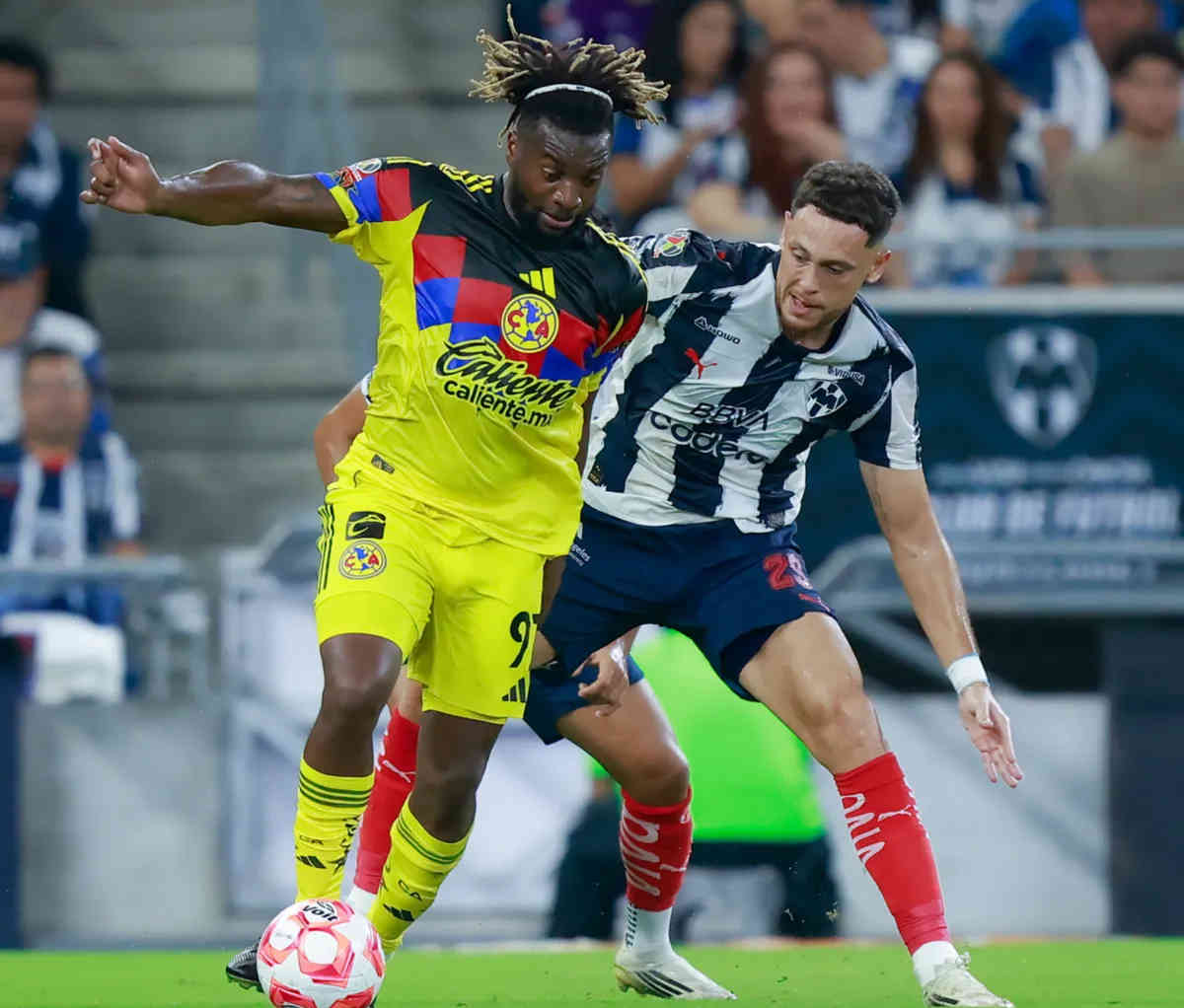
The clash between Club America vs CF Monterrey is widely considered one of the most high-stakes matchups in Mexican professional soccer. Their encounter is like no other due to the quality of players they parade in their respective teams.
Because both clubs frequently compete at the pinnacle of the Liga MX table and possess the financial capacity to maintain championship-caliber squads, their head-to-head encounters are often compared to clásicos in intensity, even though they lack the geographic roots of a traditional local derby.
Historically, the competition between the Las Águilas and Los Rayados has been remarkably balanced, reflecting two different philosophies of winning.
While Club America relies on the immense pressure and expectations of playing in the capital at the iconic Estadio Azteca, Monterrey has carved out its identity as a northern powerhouse with modern infrastructure and an aggressive, investment-heavy approach.
As of today, the competitive history between the two clubs in major domestic competitions sees America holding a slight historical edge with 19 wins, while Monterrey follows closely with 15 wins. There have been 13 draws in their encounters.
If focusing on the last decade, the gap narrows significantly. Both teams have traded victories in crucial knockout stages, turning the fixture into a true tactical chess match where individual brilliance often outweighs team form.
| Date | Competition | Home | Result | Away |
|---|---|---|---|---|
| February 8, 2026 | Clausura | Club America | 1-0 | CF Monterrey |
| November 29, 2025 | Apertura | Club America | 2-1 | CF Monterrey |
| November 26, 2025 | Apertura | CF Monterrey | 2-0 | Club America |
| September 20, 2025 | Apertura | CF Monterrey | 2-2 | Club America |
| April 16, 2025 | Clausura | CF Monterrey | 1-0 | Club America |
| February 18, 2024 | Clausura | Club America | 1-1 | CF Monterrey |
| November 5, 2023 | Apertura | CF Monterrey | 0-3 | Club America |
| June 21, 2023 | Club Friendly | Club America | 0-1 | CF Monterrey |
| October 29, 2022 | Apertura (Semi Final) | Club America | 1-2 | CF Monterrey |
| October 26, 2022 | Apertura (Semi Final) | CF Monterrey | 0-0 | Club America |
Recent Rivalry Clash
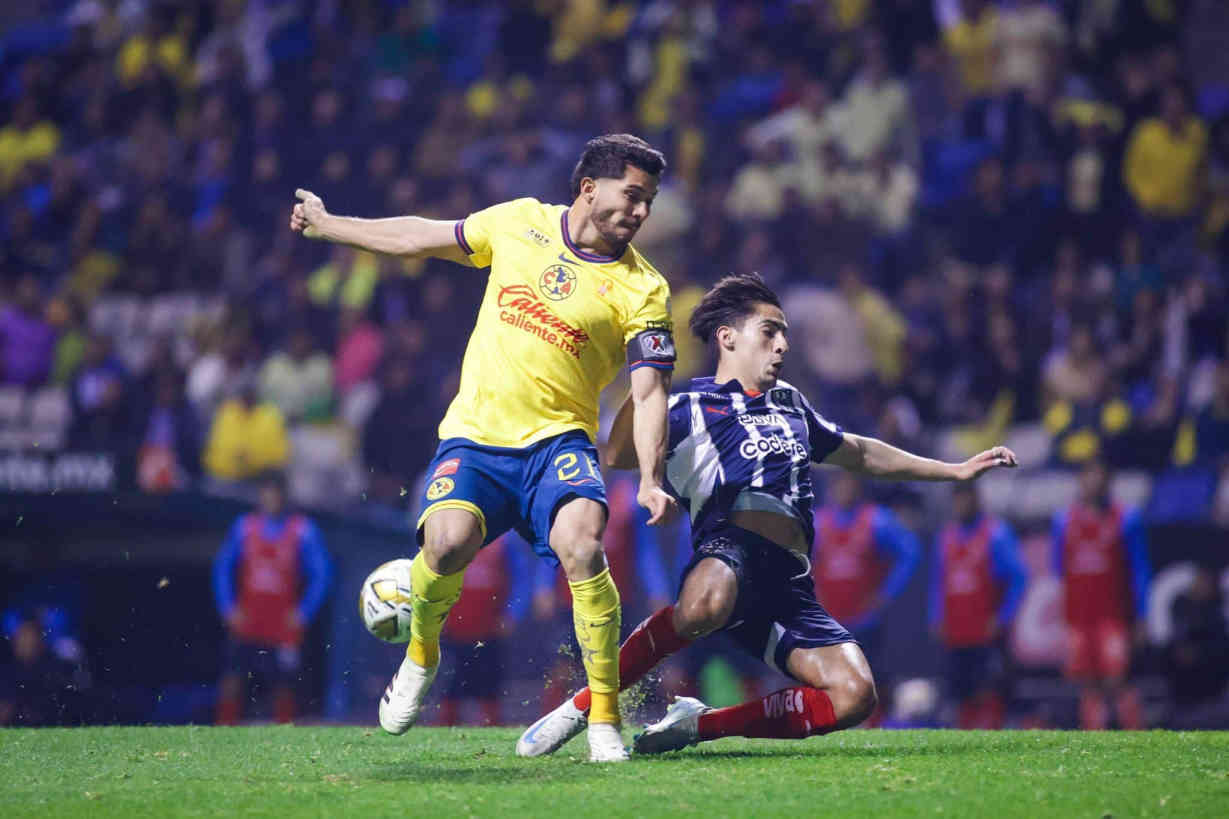
The clash between Club America vs CF Monterrey on February 7, 2026, was a definitive tactical battle that showcased the high-level discipline required in modern Liga MX.
It was played at the Estadio de la Ciudad de los Deportes. The match ended in a 1–0 victory for Club America, with a decisive second-half goal that broke the deadlock in a game defined by defensive organization.
Tactical Setup and Lineups
Both managers opted for a 4-2-3-1 formation, mirroring each other in an attempt to control the midfield and neutralize the opponent’s creative playmakers.
Club América Starting XI: Luis Malagón (GK); Kevin Álvarez, Israel Reyes, Sebastián Cáceres, Cristian Borja; Rodrigo Dourado, Jonathan dos Santos; Alejandro Zendejas, Érick Sánchez, Brian Rodríguez; Henry Martín (C).
Coach: André Jardine
CF Monterrey Starting XI: Luis Cárdenas (GK); Ricardo Chávez, Stefan Medina, Arturo Aceves, Gerardo Arteaga; Jorge Rodríguez, Fidel Ambríz; Óliver Torres, Sergio Canales (C), Lucas Ocampos; Uroš Đurđević.
Coach: Domènec Torrent
Match Breakdown: Key Moments
The game was characterized by heavy midfield traffic, with both teams struggling to break through the opponent’s defensive third until the hour mark.
First Half:
- The opening 45 minutes saw a flurry of activity in the midfield. America’s Brian Rodríguez and Zendejas were active on the flanks, while Monterrey’s Sergio Canales attempted to orchestrate play through the center.
- 14′: Zendejas tested Monterrey’s keeper, Luis Cárdenas, with a strike on goal, signaling America’s intent.
- 17′: Monterrey’s Lucas Ocampos received a yellow card as the match grew increasingly physical.
The half concluded without a breakthrough, as both teams effectively cleared their lines, resulting in a 0–0 score at the break.
Second Half:
- 60′: Domènec Torrent made an early adjustment, bringing on Jesús Corona for Ocampos to inject fresh pace.
- 65′ (GOAL): The deadlock was broken when Alejandro Zendejas found the back of the net for America. The goal was masterfully set up by Jonathan dos Santos, whose vision allowed Zendejas to exploit a slight gap in the Monterrey defense.
- 66’–78′: André Jardine responded with tactical substitutions, introducing Raphael Veiga and Víctor Dávila to secure the lead. Monterrey pushed forward in search of an equalizer, forcing Luis Malagón into action.
- 73’–75′: America remained dangerous, forcing Monterrey’s goalkeeper into two critical saves following efforts by Raphael Veiga and Kevin Álvarez.
- Monterrey attempted to mount a late surge, bringing on Iker Fimbres and Roberto de la Rosa. However, America’s disciplined 4-2-3-1 shifted into a more compact defensive block, effectively shutting down passing lanes.
- 90’+: The game ended in a flurry of yellow cards and late tactical subs, with America successfully managing the clock to secure all three points in front of their home crowd.
Key Players
Álvaro Fidalgo (America): Currently one of the most vital tactical components for Las Águilas, Fidalgo has become the heart of America’s possession-based approach.
His ability to control the tempo against a physically demanding Monterrey midfield often dictates the flow of their head-to-head encounters.
Sergio Canales (Monterrey): Since his high-profile arrival from La Liga, Canales has become the creative focal point for Rayados.
His vision and ability to unlock deep-sitting defenses have made him a constant threat in recent fixtures, serving as the primary counterbalance to America’s midfield dominance.
Alejandro Zendejas (America): A consistent thorn in the side for Monterrey’s defense, Zendejas has a knack for scoring in high-pressure games, including the decisive goal in their February 2026 meeting.
His pace and movement between the lines are often the keys to breaking the tactical stalemates that frequently occur between these two sides.
Lucas Ocampos (Monterrey): Bringing European pedigree to the Rayados attack, Ocampos represents the type of high-impact signing that defines this rivalry.
His physical presence and goal-scoring instincts are essential for Monterrey when they need to transition quickly against America’s backline.
Carlos Reinoso (America): Often cited as one of the greatest foreign players in Liga MX history, Reinoso’s technical brilliance defined an era for America.
His ability to produce magic in clutch moments, such as his legendary free-kick goal to win a championship, set the precedent for the winning at all costs mentality that still drives the club today.
Jesús “Cabrito” Arellano (Monterrey): A symbol of loyalty and skill for Monterrey, Arellano’s long tenure as captain anchored the club through decades of growth.
Players of his profile represent the identity of Rayados, which is a blend of homegrown dedication and elite technical skill.
Carlos Hermosillo: A rare bridge between the two, Hermosillo is remembered for his prolific scoring ability for both clubs.
His presence in the 1990s added a layer of complexity to the rivalry, as players moving between these giants often carried the tactical secrets of one into the camp of the other.
In recent matches between the two teams, the difference has frequently been determined by bench depth and late-game tactical adjustments from managers like André Jardine for America and Domènec Torrent for Monterrey.